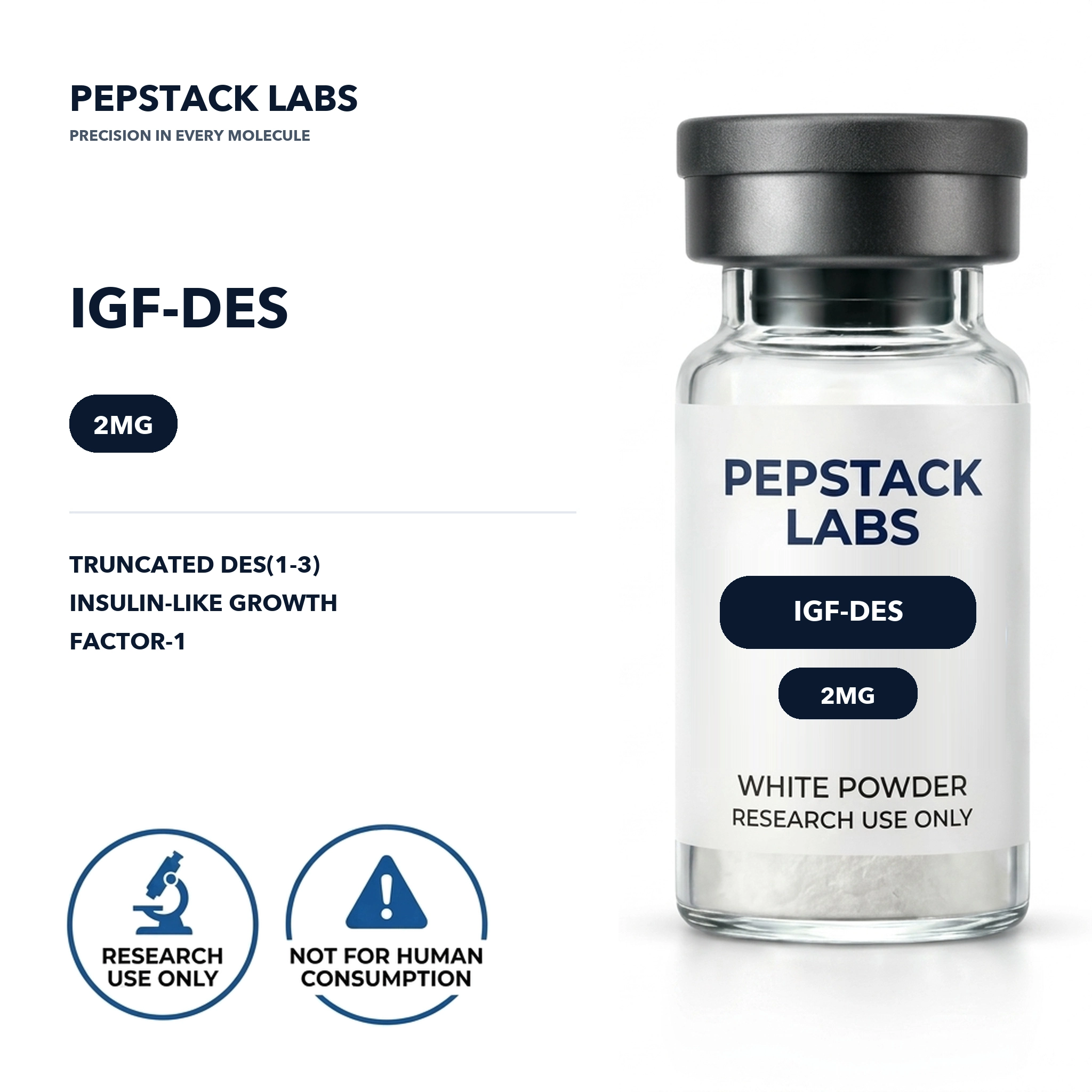
IGF-DES
Analytical Standards & Laboratory Handling
Verified laboratory protocols, reconstitution parameters, and handling guidelines.
Pharmacological Profile & Mechanism of Action
What it is: IGF-DES (also known as Des(1-3) IGF-1) is a naturally occurring truncated splice variant of native human IGF-1 that lacks the first three N-terminal amino acids (Gly-Pro-Glu).
How it works: Removal of the N-terminal tripeptide eliminates virtually all affinity for inhibitory IGF-Binding Proteins (IGFBPs). Because it does not bind to circulating IGFBPs, IGF-DES exhibits up to 10-fold greater potency than native IGF-1 at local tissue IGF-1 receptors. While its systemic half-life is short (~20–30 minutes), it produces an intense, localized burst of receptor activation, driving rapid glucose transport and immediate ribosomal protein synthesis directly at the target tissue site.
Why researchers study it: Researched for localized muscle tissue regeneration, targeted hypertrophy, tendon-to-bone junction repair, and acute post-injury cellular repair without prolonged systemic hypoglycemia.