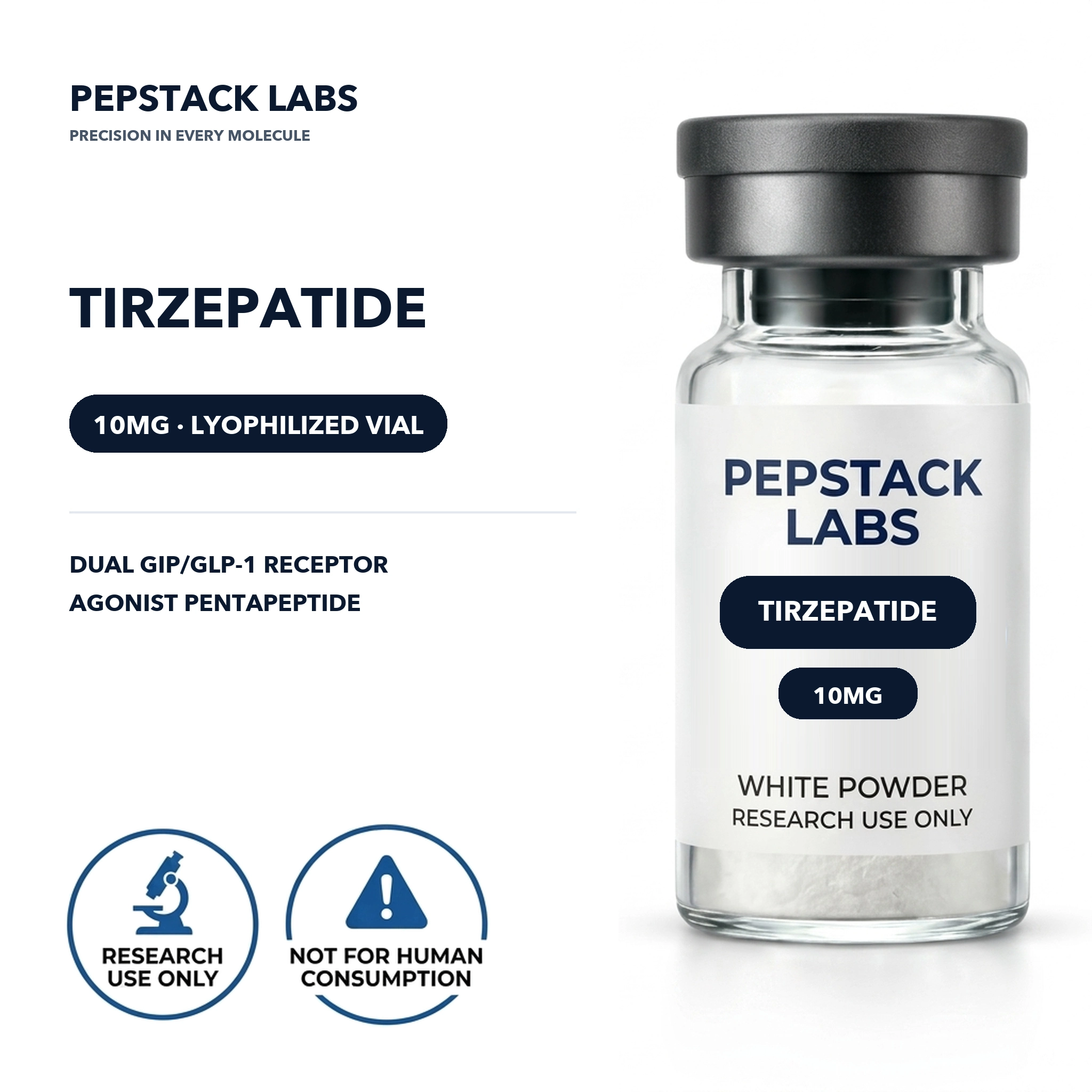
Tirzepatide
Analytical Standards & Laboratory Handling
Verified laboratory protocols, reconstitution parameters, and handling guidelines.
Pharmacological Profile & Mechanism of Action
What it is: Tirzepatide is a synthetic 39-amino-acid peptide that represents a major scientific breakthrough: a first-in-class dual agonist that activates both GIP and GLP-1 receptors simultaneously.
How it works: By triggering both glucose-dependent insulinotropic polypeptide (GIP) and GLP-1 receptors, Tirzepatide coordinates metabolic control on two fronts. GIP enhances fat cell sensitivity and lipid metabolism, while GLP-1 curbs appetite and controls blood sugar. Together, they create a synergistic effect on fat loss and metabolic rate that surpasses single-hormone compounds.
Why researchers study it: Studied for massive body weight and fat reduction (averaging 20–25% in clinical trials), reversal of type 2 diabetes, fatty liver resolution, sleep apnea improvement, and cardiovascular risk reduction.
Compound & Molecular Specifications
Certificate of Analysis StandardsFrequently Stacked with Tirzepatide
Clinically verified combinations activating complementary physiological pathways without receptor competition.
AOD-9604 (Lipolytic Fragment)
Tirzepatide centrally suppresses appetite, improves glycemic control, and downregulates hepatic de novo lipogenesis via GLP-1/GIP. AOD-9604 acts peripherally on adipocyte beta-3 adrenergic receptors to trigger active lipolysis and fat breakdown without interfering with blood glucose or insulin sensitivity.
BPC-157 (Pentadecapeptide)
GLP-1 receptor agonists can cause transient delayed gastric emptying, nausea, and mucosal irritation. BPC-157 provides direct cytoprotective benefits across gastric epithelium, reducing gut discomfort while incretins drive metabolic weight loss.