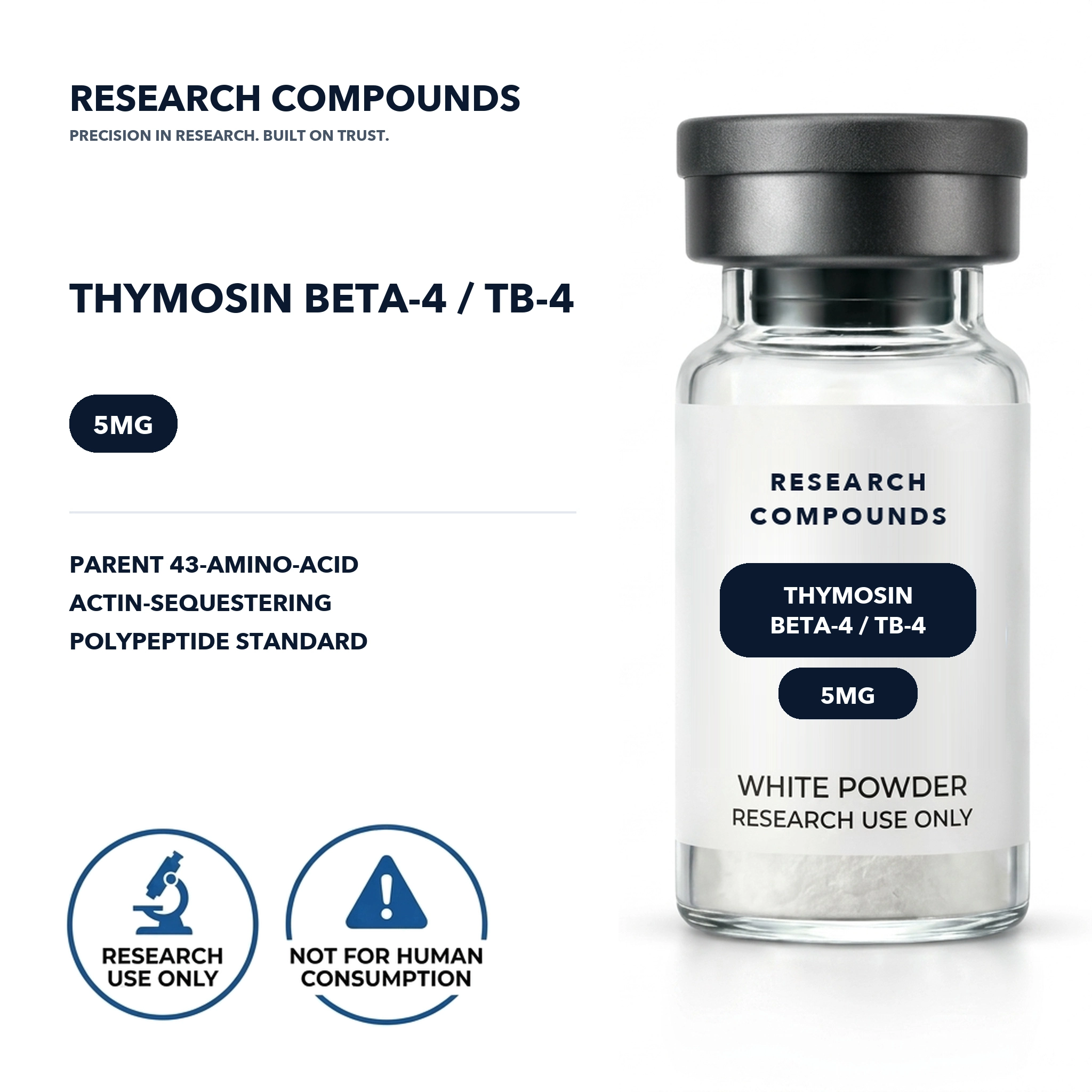
Thymosin Beta-4 / TB-4 (5mg Full-Length 43AA Vial)
Analytical Standards & Laboratory Handling
Verified laboratory protocols, reconstitution parameters, and handling guidelines.
Pharmacological Profile & Mechanism of Action
What it is: Thymosin Beta-4 (TB-4) is the full-length 43-amino-acid parent polypeptide naturally occurring in high concentrations in platelets and wound fluid, of which TB-500 represents an abbreviated fragment (LKKTET).
How it works: TB-4 sequesters monomeric G-actin, regulating cellular cytoskeletal remodeling, accelerating keratinocyte and endothelial cell migration, stimulating angiogenesis via VEGF, and suppressing pro-fibrotic myofibroblast differentiation.
Why researchers study it: Researched in corneal re-epithelialization, myocardial infarction tissue preservation, and severe dermal wound regeneration.
Compound & Molecular Specifications
Certificate of Analysis StandardsFrequently Stacked with TB-500 (Thymosin Beta-4 Frag)
Clinically verified combinations activating complementary physiological pathways without receptor competition.
BPC-157 Arginate (Stable Oral/SubQ)
Stable L-arginate salt of BPC-157 ensures robust microvascular VEGFR2 capillary ingrowth and gut barrier recovery, perfectly paired with TB-500 systemic G-actin sequestration for organized scar-free tissue repair.
BPC-157 (Pentadecapeptide)
BPC-157 acts locally by accelerating microvascular angiogenesis via VEGFR2 and stabilizing granulation tissue, while TB-500 sequesters G-actin to drive rapid systemic cell migration and prevent fibrous adhesion/scar formation.