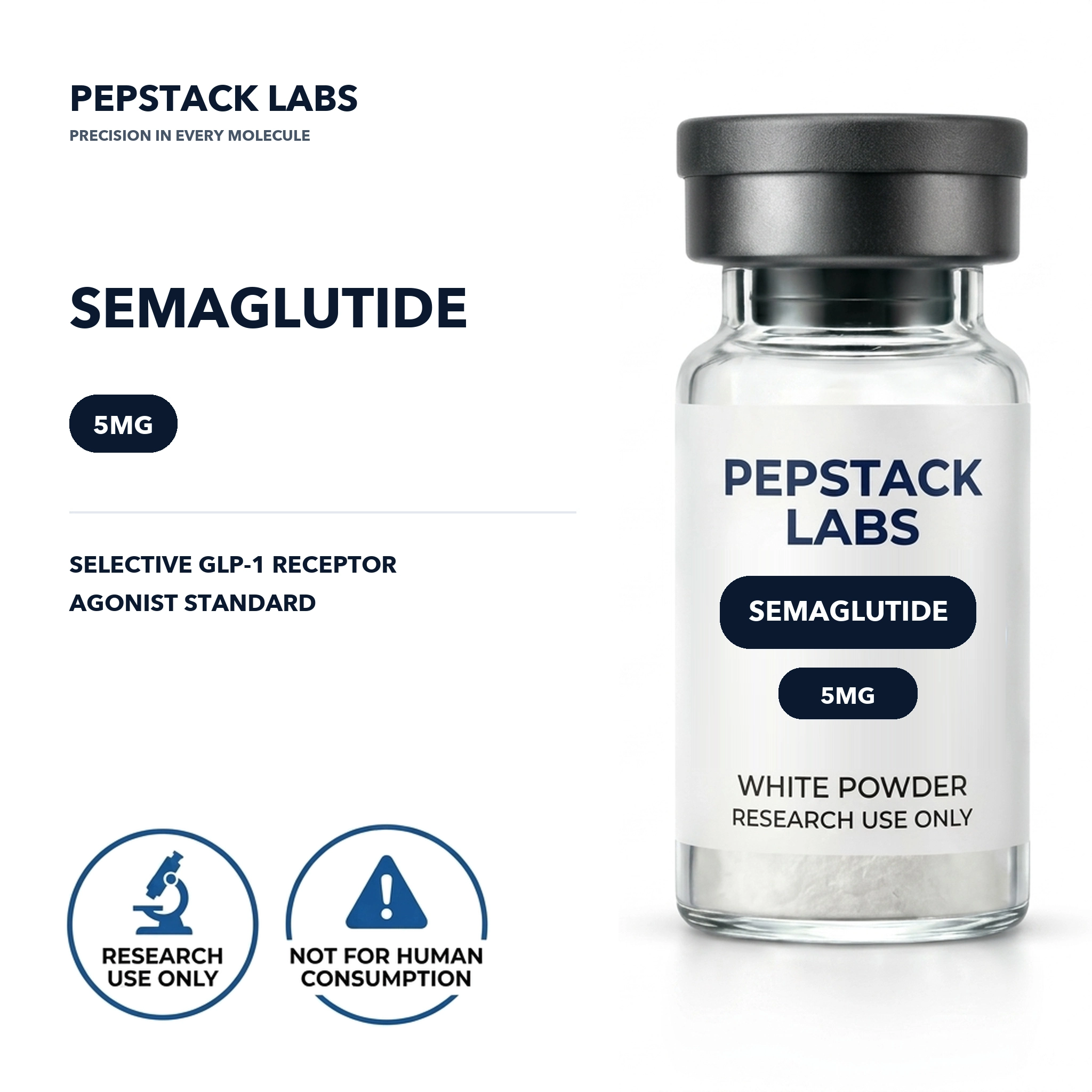
Semaglutide
Analytical Standards & Laboratory Handling
Verified laboratory protocols, reconstitution parameters, and handling guidelines.
Pharmacological Profile & Mechanism of Action
What it is: Semaglutide is a long-acting synthetic GLP-1 (Glucagon-Like Peptide-1) receptor agonist peptide engineered with an albumin-binding fatty acid side chain that extends its biological half-life to approximately one week.
How it works: It activates GLP-1 receptors in the pancreas to stimulate insulin release only when glucose is elevated, while suppressing excess glucagon secretion. In the brain and stomach, it slows gastric emptying and acts on the hypothalamus to significantly reduce appetite, hunger cravings, and food preoccupation.
Why researchers study it: Widely researched for profound weight management, visceral fat reduction, blood sugar regulation, improved cardiovascular health, and non-alcoholic fatty liver disease (NAFLD/NASH).
Compound & Molecular Specifications
Certificate of Analysis StandardsFrequently Stacked with Semaglutide
Clinically verified combinations activating complementary physiological pathways without receptor competition.
Cagrilintide (Amylin Analogue)
Cagrilintide engages area postrema and ventral tegmental amylin receptors while Semaglutide stimulates hypothalamic GLP-1 receptors, producing multiplicative appetite suppression and glycemic control superior to either monotherapy.
BPC-157 (Pentadecapeptide)
Semaglutide delays gastric motility to enhance satiety. BPC-157 upregulates tight junction proteins (Claudin, Zonula Occludens) and nitric oxide synthesis, minimizing digestive cramping and acid reflux in GLP-1 naive subjects.