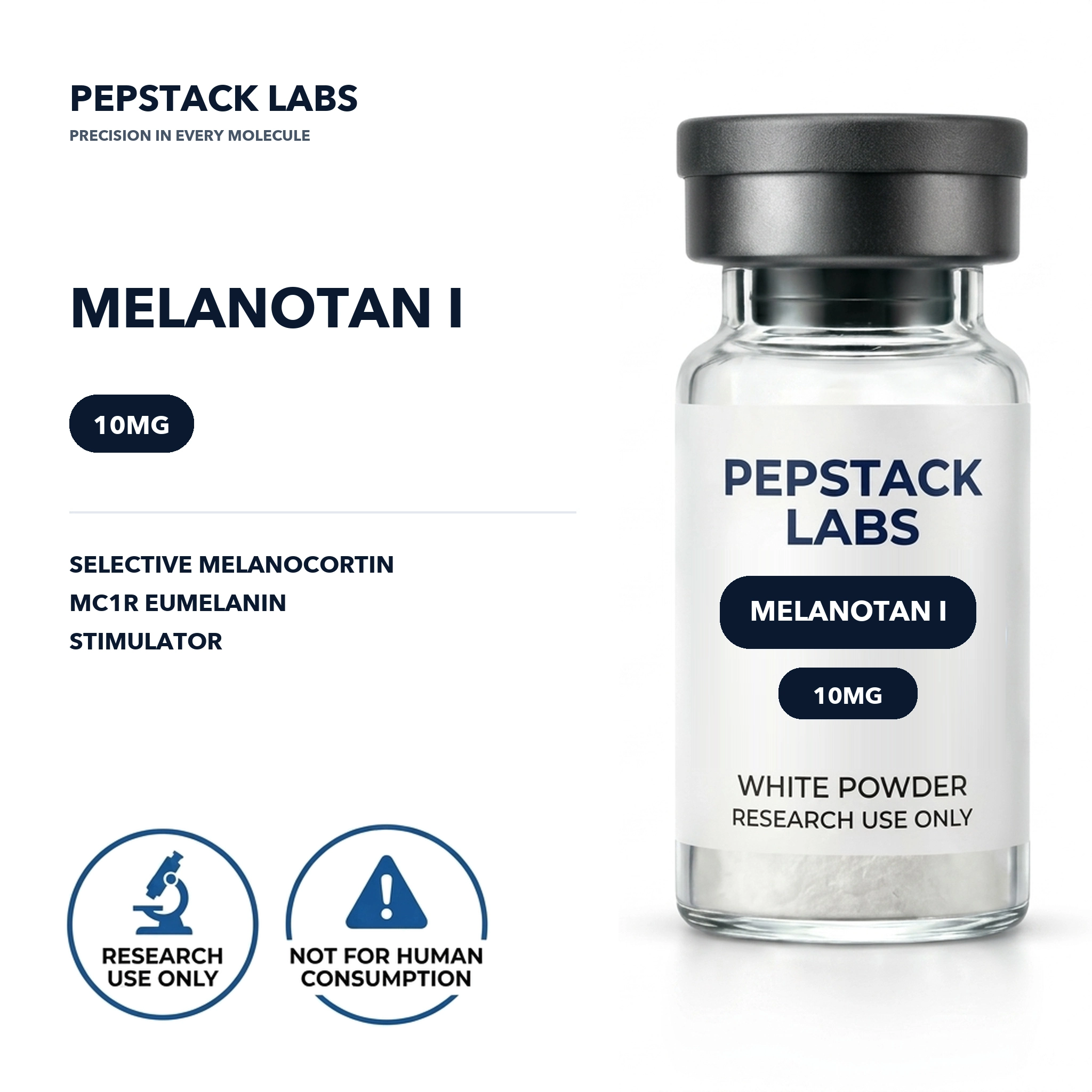
Melanotan I
Analytical Standards & Laboratory Handling
Verified laboratory protocols, reconstitution parameters, and handling guidelines.
Pharmacological Profile & Mechanism of Action
What it is: Melanotan I (Afamelanotide) is a synthetic 13-amino-acid peptide analogue of alpha-Melanocyte-Stimulating Hormone (alpha-MSH), engineered with two amino acid substitutions to resist enzyme degradation.
How it works: It selectively binds to the Melanocortin-1 Receptor (MC1R) on melanocytes in the skin. This triggers eumelanin synthesis—the rich brown/black protective pigment that naturally absorbs and shields skin cells from damaging UV radiation. Crucially, because it is highly selective for MC1R, it promotes skin pigmentation without the severe nausea, blood pressure spikes, or sexual arousal caused by non-selective melanocortins.
Why researchers study it: Studied for photoprotection in erythropoietic protoporphyria (EPP), preventing skin damage and sunburn in fair-skinned subjects, and generating natural, UV-free photoprotective pigmentation.
Compound & Molecular Specifications
Certificate of Analysis StandardsFrequently Stacked with Melanotan II
Clinically verified combinations activating complementary physiological pathways without receptor competition.
PT-141 (Bremelanotide)
Melanotan II provides systemic melanin upregulation via MC1R/MC4R, while PT-141 (Bremelanotide) selectively acts centrally on hypothalamic MC4R to trigger rapid erectile and sexual arousal pathways without cardiovascular vasoconstriction.