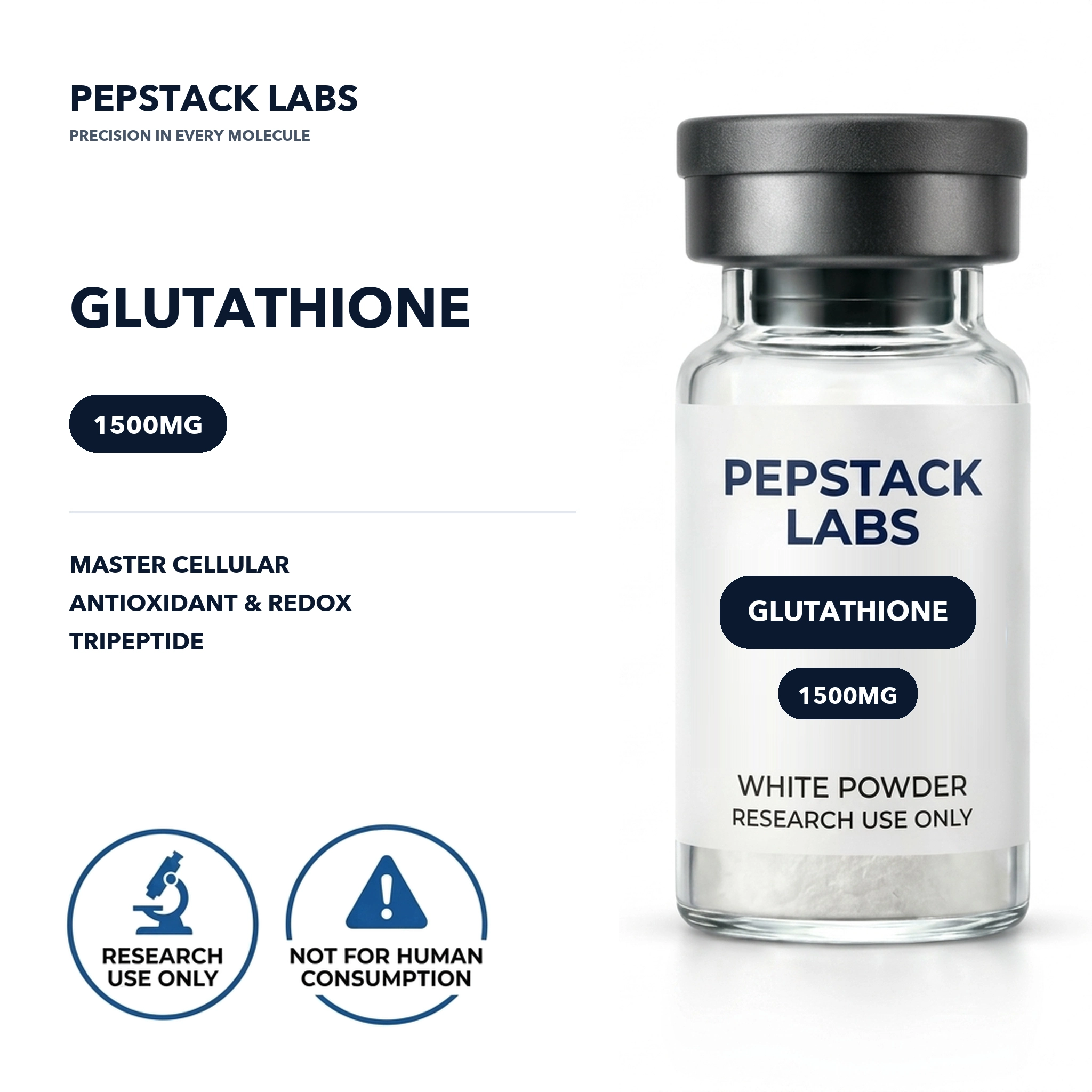
Glutathione
Analytical Standards & Laboratory Handling
Verified laboratory protocols, reconstitution parameters, and handling guidelines.
Pharmacological Profile & Mechanism of Action
What it is: Glutathione (GSH) is a natural tripeptide composed of Glutamine, Cysteine, and Glycine, recognized as the body's 'Master Antioxidant' and primary hepatic detoxifier.
How it works: Glutathione neutralizes free radicals, reactive oxygen species, and heavy metals by directly donating electrons via its active sulfhydryl (-SH) group. In the liver, it binds to toxic compounds via glutathione S-transferase enzymes, converting them into water-soluble forms for safe excretion. It also regenerates other vital antioxidants like Vitamin C and Vitamin E back into their active forms.
Why researchers study it: Researched for liver detoxification, reversing oxidative stress, skin brightening and melanin inhibition, immune system enhancement, and protecting cellular DNA from environmental pollutants.
Compound & Molecular Specifications
Certificate of Analysis StandardsFrequently Stacked with Glutathione (Reduced GSH)
Clinically verified combinations activating complementary physiological pathways without receptor competition.
NAD+ (Nicotinamide Adenine Dinucleotide)
NAD+ replenishes the mitochondrial electron transport chain, generating minor reactive oxygen species (ROS) during oxidative phosphorylation. Glutathione acts as the master intracellular ROS scavenger, converting hydrogen peroxide to water and preserving mitochondrial membrane potential.