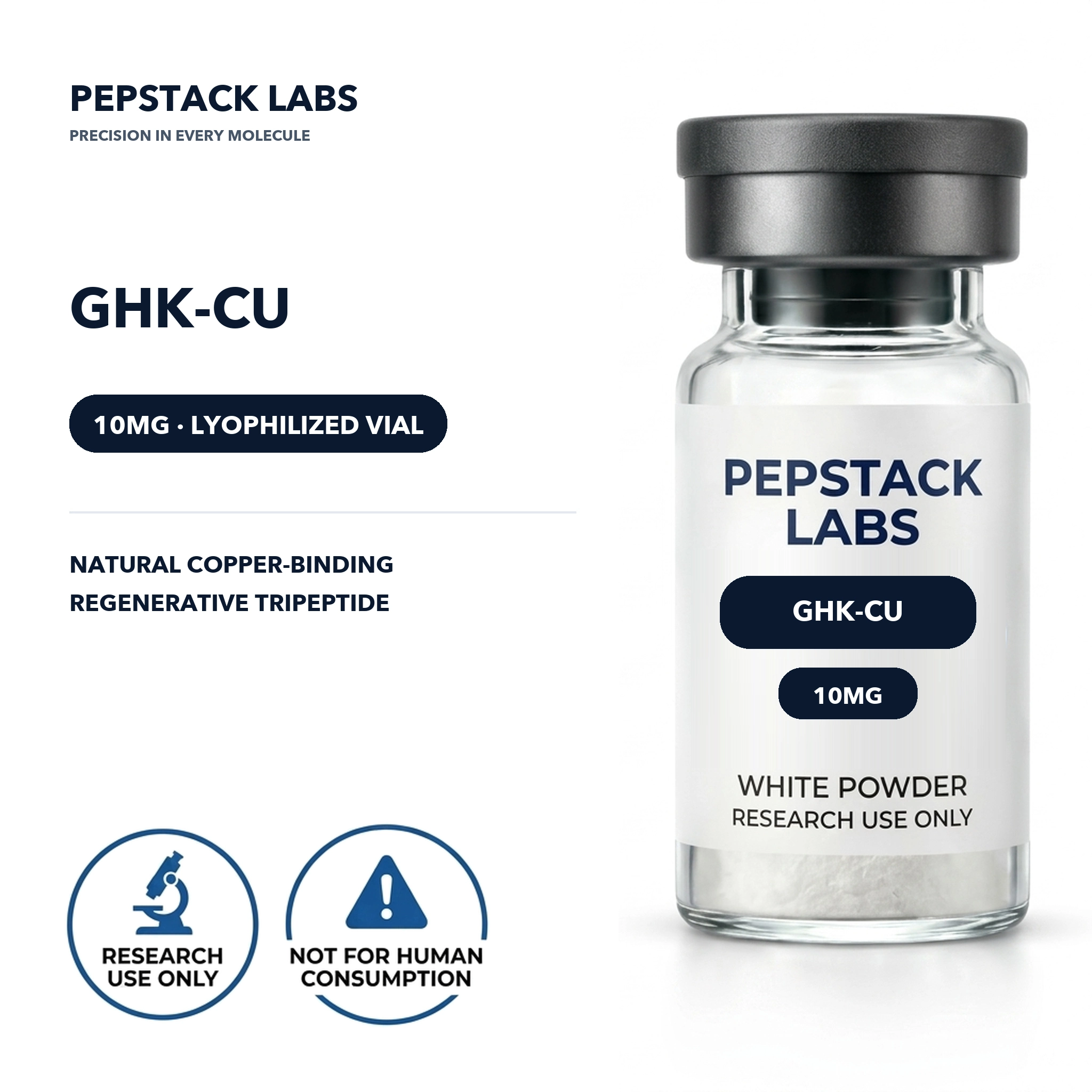
GHK-Cu
Analytical Standards & Laboratory Handling
Verified laboratory protocols, reconstitution parameters, and handling guidelines.
Pharmacological Profile & Mechanism of Action
What it is: GHK-Cu (Glycyl-L-Histidyl-L-Lysine Copper) is a naturally occurring human tripeptide chelated with a copper(II) ion, present in human plasma, saliva, and urine, where its levels decline significantly with age.
How it works: GHK-Cu regulates over 4,000 human genes, shifting gene expression toward youthful cellular repair. It stimulates both collagen and elastin synthesis, enhances fibroblast production, activates nerve outgrowth, and acts as a potent antioxidant by quenching free radicals and toxic lipid peroxidation products.
Why researchers study it: Studied extensively for skin rejuvenation, wrinkle reduction, wound repair, anti-aging, hair follicle stimulation, and reversing tissue fibrosis in organs and joints.
Compound & Molecular Specifications
Certificate of Analysis StandardsFrequently Stacked with GHK-Cu (Copper Tripeptide-1)
Clinically verified combinations activating complementary physiological pathways without receptor competition.
BPC-157 (Pentadecapeptide)
BPC-157 rapidly generates fresh capillary networks (angiogenesis) to deliver oxygen and amino acids to damaged tissue, while GHK-Cu signals fibroblasts to synthesize new type I/III collagen and elastin while inhibiting TGF-beta scar formation.