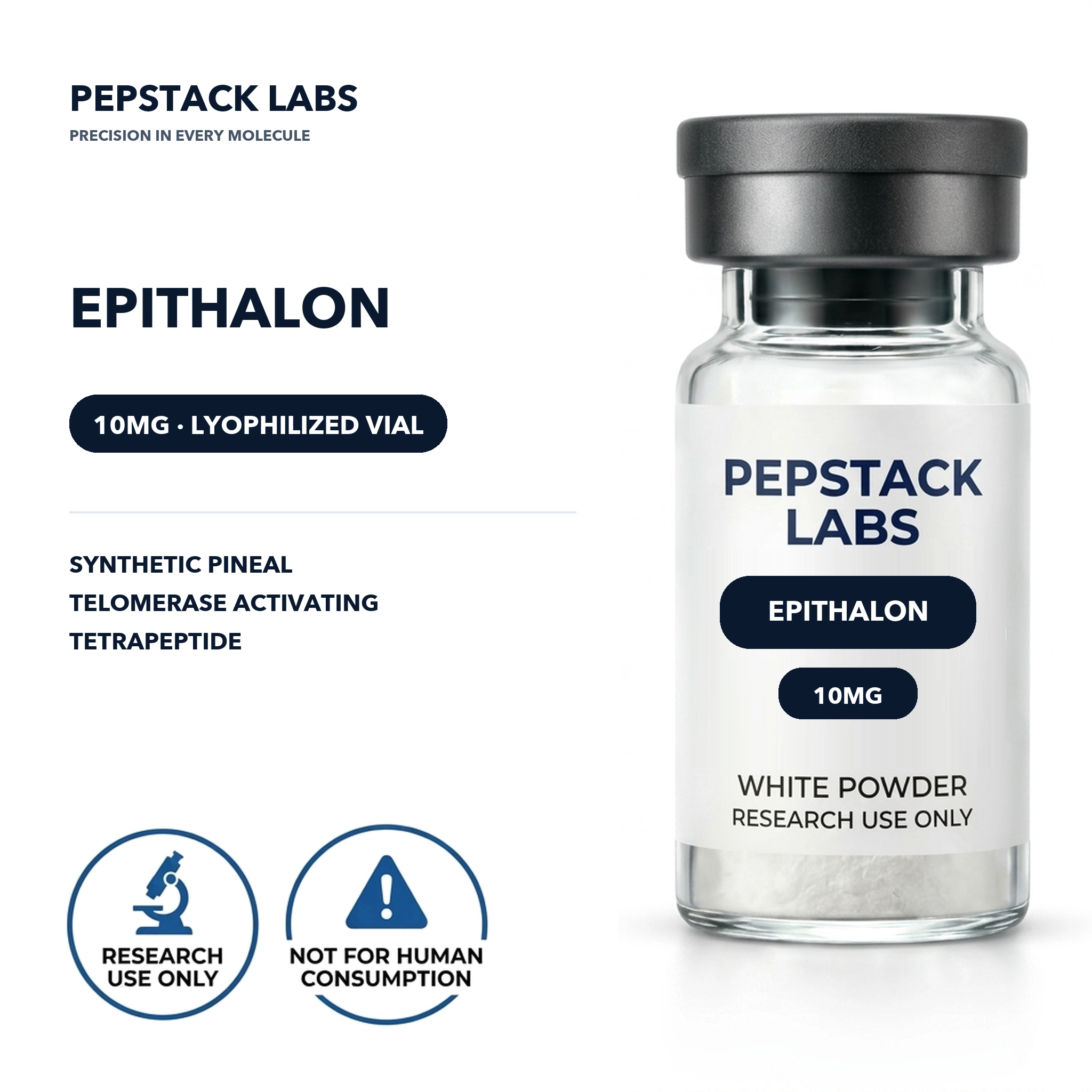
Epithalon
Analytical Standards & Laboratory Handling
Verified laboratory protocols, reconstitution parameters, and handling guidelines.
Pharmacological Profile & Mechanism of Action
What it is: Epithalon (also spelled Epitalon) is a synthetic tetrapeptide (Ala-Glu-Asp-Gly) based on epithalamin, a natural peptide extract of the pineal gland discovered by Russian biogerontologist Prof. Vladimir Khavinson.
How it works: It acts on the pineal gland to restore natural melatonin secretion rhythms, while uniquely activating the telomerase enzyme. By stimulating telomerase, Epithalon extends the protective telomeres at the ends of chromosomes, allowing aging cells to exceed the traditional Hayflick division limit and repair themselves for longer.
Why researchers study it: Studied worldwide for lifespan extension, telomere lengthening, resetting circadian sleep rhythms, antioxidant enzyme upregulation, cancer prevention, and restoring endocrine balance in aging models.
Compound & Molecular Specifications
Certificate of Analysis StandardsFrequently Stacked with Epithalon (Epitalon)
Clinically verified combinations activating complementary physiological pathways without receptor competition.
NAD+ (Nicotinamide Adenine Dinucleotide)
Epithalon stimulates telomerase reverse transcriptase (TERT) to preserve chromosomal telomere length and circadian rhythm, while NAD+ directly fuels mitochondrial ATP synthesis and activates Sirtuin enzymes (SIRT1/SIRT3) for cellular DNA repair.