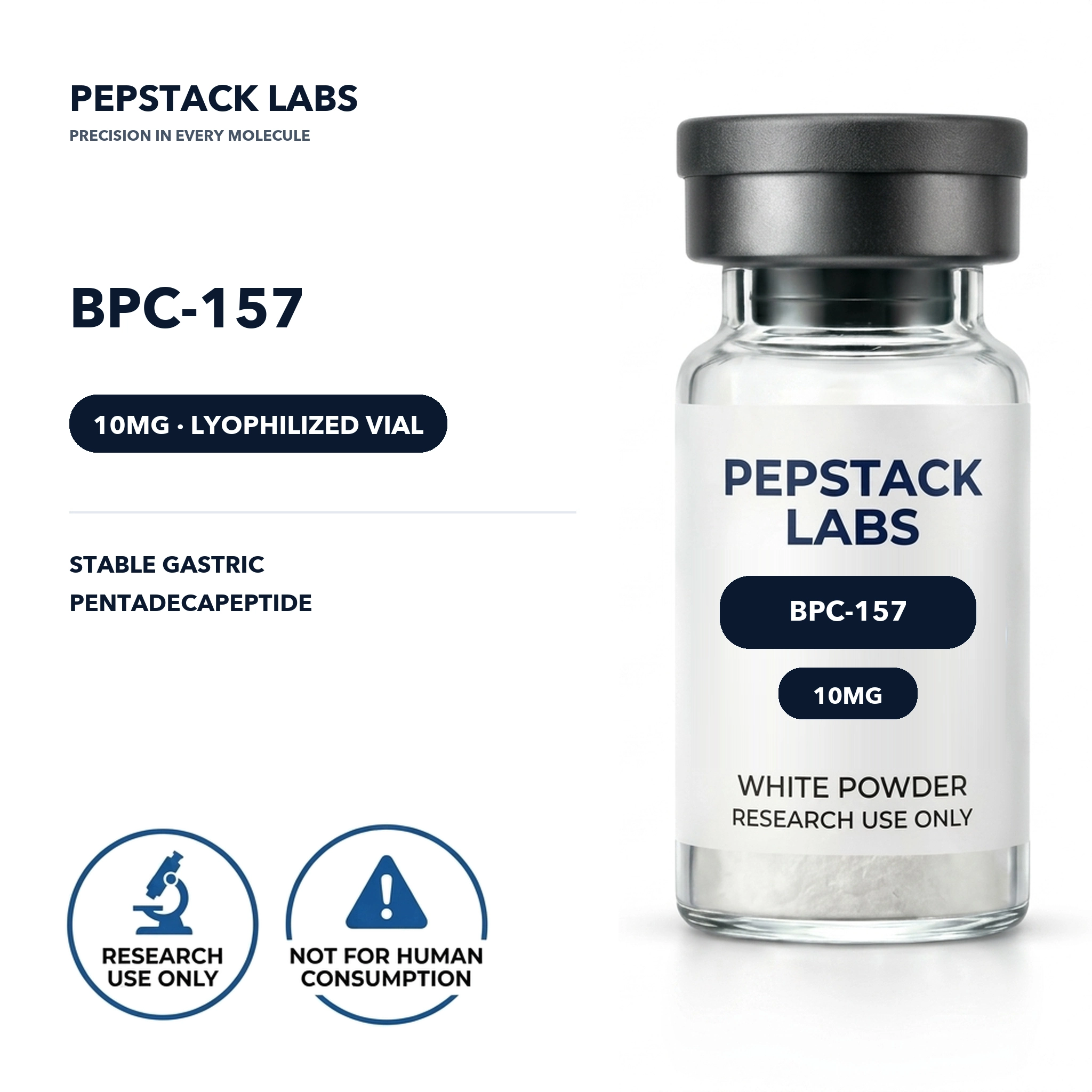
BPC-157
Analytical Standards & Laboratory Handling
Verified laboratory protocols, reconstitution parameters, and handling guidelines.
Pharmacological Profile & Mechanism of Action
What it is: BPC-157 (Body Protection Compound-157) is a peptide composed of 15 amino acids, originally discovered in natural gastric digestive juices where it protects stomach tissue from acid and enzymes.
How it works: In laboratory models, BPC-157 stimulates the formation of fresh microvascular blood vessels (angiogenesis) by activating early growth response-1 (egr-1) and VEGF receptor pathways. It also activates nitric oxide (eNOS) production to improve local blood flow, while upregulating collagen synthesis and cell migration directly at damaged tissue sites.
Why researchers study it: Studied extensively for accelerating tendon, ligament, muscle, and gut lining healing, reducing systemic inflammation, and protecting gastrointestinal integrity from injury and ulceration.
Compound & Molecular Specifications
Certificate of Analysis StandardsFrequently Stacked with BPC-157 (Pentadecapeptide)
Clinically verified combinations activating complementary physiological pathways without receptor competition.
TB-500 (Thymosin Beta-4 Frag)
BPC-157 acts locally by accelerating microvascular angiogenesis via VEGFR2 and stabilizing granulation tissue, while TB-500 sequesters G-actin to drive rapid systemic cell migration and prevent fibrous adhesion/scar formation.
GHK-Cu (Copper Tripeptide-1)
BPC-157 rapidly generates fresh capillary networks (angiogenesis) to deliver oxygen and amino acids to damaged tissue, while GHK-Cu signals fibroblasts to synthesize new type I/III collagen and elastin while inhibiting TGF-beta scar formation.
Tirzepatide
GLP-1 receptor agonists can cause transient delayed gastric emptying, nausea, and mucosal irritation. BPC-157 provides direct cytoprotective benefits across gastric epithelium, reducing gut discomfort while incretins drive metabolic weight loss.
Semaglutide
Semaglutide delays gastric motility to enhance satiety. BPC-157 upregulates tight junction proteins (Claudin, Zonula Occludens) and nitric oxide synthesis, minimizing digestive cramping and acid reflux in GLP-1 naive subjects.