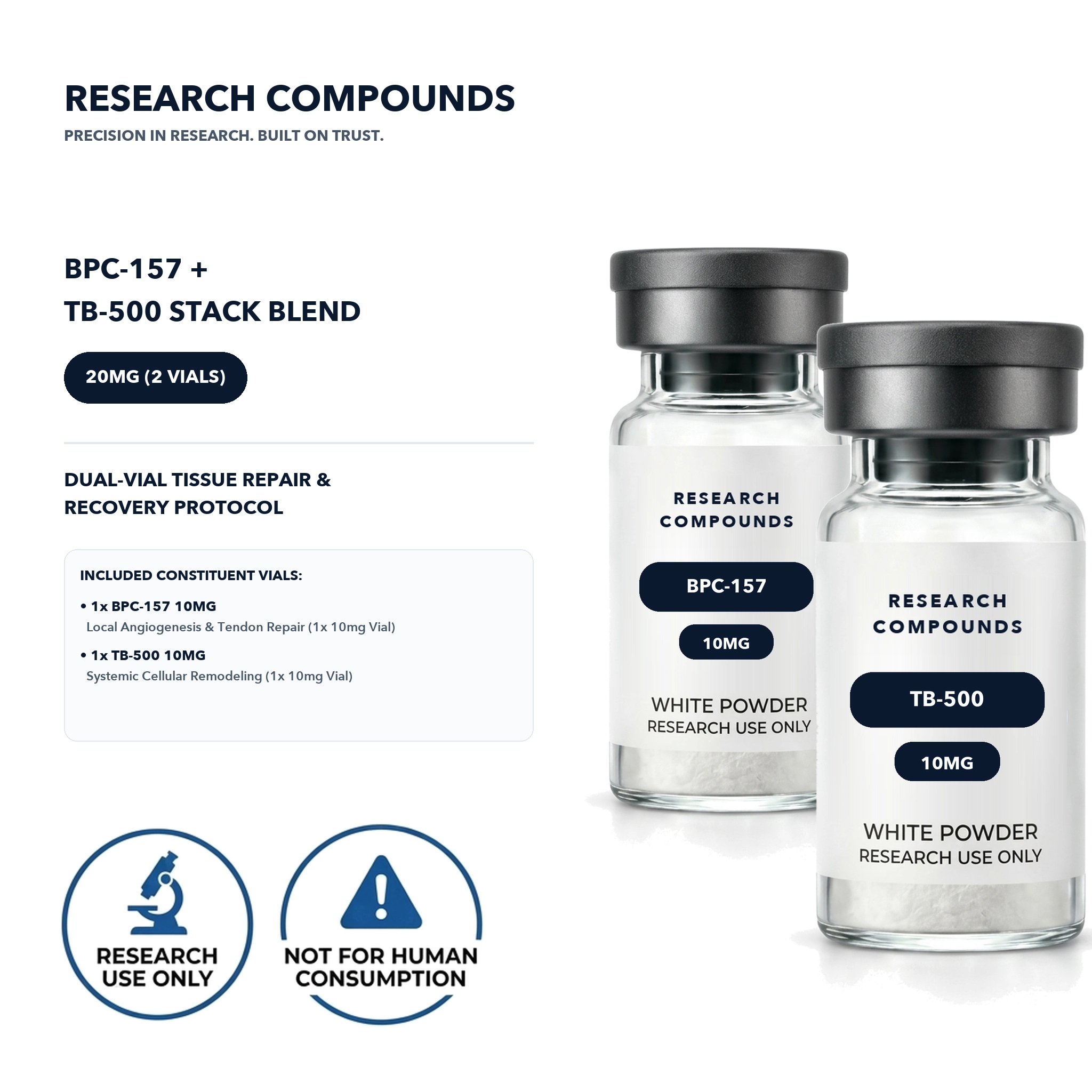
BPC-157 + TB-500 Stack (Dual-Vial Tissue Repair Kit)
Analytical Standards & Laboratory Handling
Verified laboratory protocols, reconstitution parameters, and handling guidelines.
Pharmacological Profile & Mechanism of Action
What it is: A premier dual-vial musculoskeletal tissue repair research stack combining BPC-157 (5mg gastric pentadecapeptide) and TB-500 (5mg Thymosin β4 synthetic standard) in two separate sterile analytical vials.
How it works: BPC-157 acts locally at injury sites by upregulating vascular endothelial growth factor (VEGF) and Early Growth Response 1 (EGR-1) to build new microvascular beds and organize collagen fibers. Simultaneously, TB-500 acts systemically by sequestering G-actin into F-actin polymers, driving rapid cellular migration of fibroblasts and stem cells directly to damaged tendons, ligaments, and muscle.
CRITICAL LABORATORY RECONSTITUTION & ASSAY HANDLING: Each constituent vial must be reconstituted separately in its own 2.0 mL Bacteriostatic Water volume. Administer in separate experimental channels or distinct transfer needles to prevent cross-vial solution contamination.
Compound & Molecular Specifications
Certificate of Analysis StandardsFrequently Stacked with BPC-157 (Pentadecapeptide)
Clinically verified combinations activating complementary physiological pathways without receptor competition.
TB-500 (Thymosin Beta-4 Frag)
BPC-157 acts locally by accelerating microvascular angiogenesis via VEGFR2 and stabilizing granulation tissue, while TB-500 sequesters G-actin to drive rapid systemic cell migration and prevent fibrous adhesion/scar formation.
GHK-Cu (Copper Tripeptide-1)
BPC-157 rapidly generates fresh capillary networks (angiogenesis) to deliver oxygen and amino acids to damaged tissue, while GHK-Cu signals fibroblasts to synthesize new type I/III collagen and elastin while inhibiting TGF-beta scar formation.
Tirzepatide
GLP-1 receptor agonists can cause transient delayed gastric emptying, nausea, and mucosal irritation. BPC-157 provides direct cytoprotective benefits across gastric epithelium, reducing gut discomfort while incretins drive metabolic weight loss.
Semaglutide
Semaglutide delays gastric motility to enhance satiety. BPC-157 upregulates tight junction proteins (Claudin, Zonula Occludens) and nitric oxide synthesis, minimizing digestive cramping and acid reflux in GLP-1 naive subjects.