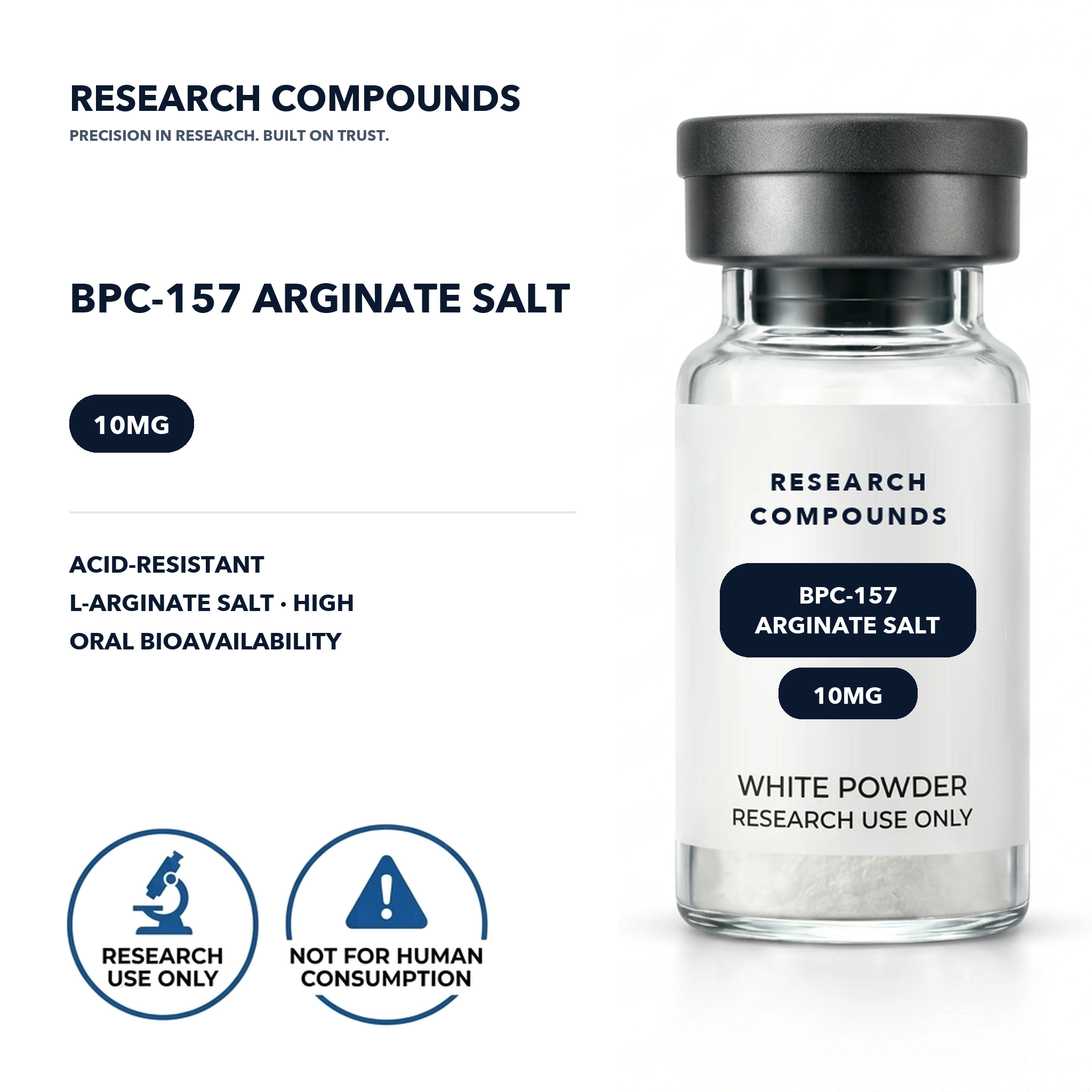
BPC-157 Arginate Salt (10mg Acid-Stable Vial)
Analytical Standards & Laboratory Handling
Verified laboratory protocols, reconstitution parameters, and handling guidelines.
Pharmacological Profile & Mechanism of Action
What it is: BPC-157 Arginate is a stabilized salt form pairing the 15-amino-acid Body Protection Compound sequence with L-arginine, engineered to resist proteolytic gastric degradation.
How it works: Unlike standard BPC-157 acetate which degrades rapidly in human gastric juice (pH ~1–2), BPC-157 Arginate remains >90% intact after 5 hours in simulated gastric acid, allowing direct oral delivery while retaining full angiogenic and anti-inflammatory signaling.
Why researchers study it: Researched in oral models of inflammatory bowel disease (ulcerative colitis, Crohn's), mucosal ulcer healing, and systemic soft-tissue tendon repair.
Compound & Molecular Specifications
Certificate of Analysis StandardsFrequently Stacked with BPC-157 (Pentadecapeptide)
Clinically verified combinations activating complementary physiological pathways without receptor competition.
TB-500 (Thymosin Beta-4 Frag)
BPC-157 acts locally by accelerating microvascular angiogenesis via VEGFR2 and stabilizing granulation tissue, while TB-500 sequesters G-actin to drive rapid systemic cell migration and prevent fibrous adhesion/scar formation.
GHK-Cu (Copper Tripeptide-1)
BPC-157 rapidly generates fresh capillary networks (angiogenesis) to deliver oxygen and amino acids to damaged tissue, while GHK-Cu signals fibroblasts to synthesize new type I/III collagen and elastin while inhibiting TGF-beta scar formation.
Tirzepatide
GLP-1 receptor agonists can cause transient delayed gastric emptying, nausea, and mucosal irritation. BPC-157 provides direct cytoprotective benefits across gastric epithelium, reducing gut discomfort while incretins drive metabolic weight loss.
Semaglutide
Semaglutide delays gastric motility to enhance satiety. BPC-157 upregulates tight junction proteins (Claudin, Zonula Occludens) and nitric oxide synthesis, minimizing digestive cramping and acid reflux in GLP-1 naive subjects.